Web Development
Websites, stores and portals
Content-managed sites, storefronts and customer portals, built on the platform that fits the job rather than the one that is fashionable. You keep an editor and the keys.
Search our articles on web development, AI automation, digital marketing and more.
YOUR GLOBAL TECHNOLOGY PARTNER
We design, build and manage digital products for businesses worldwide: websites, mobile apps, AI automation and cloud. Every engagement is scoped before it starts and handed over documented.




OUR SERVICES
Most technology projects stall between a good idea and a working product. We cover that whole distance: the conversation that defines the problem, the design and build that solve it, and the support that keeps it useful afterwards.
Every engagement is scoped in plain language and priced before the work starts.
Web Development
Content-managed sites, storefronts and customer portals, built on the platform that fits the job rather than the one that is fashionable. You keep an editor and the keys.

AI & Automation
Automate the repetitive part of a process and put a person back on the judgement it actually needs, with the reasoning documented so the system can be checked.


Mobile Apps
One codebase where it makes sense and native where it does not, with the store submission handled as part of the work rather than as a step you do yourself afterwards.


AI-DRIVEN TECHNOLOGY
We use AI where it earns its place rather than as a label. That means automating the document handling, triage, reporting and first-line support that currently absorbs manual hours, connecting it to the systems your team already runs, and keeping a person in the loop wherever judgement matters. We identify the specific repeated task worth removing, choose the smallest approach that solves it properly, and agree how success is measured before the build starts.
Explore Our Technology Stack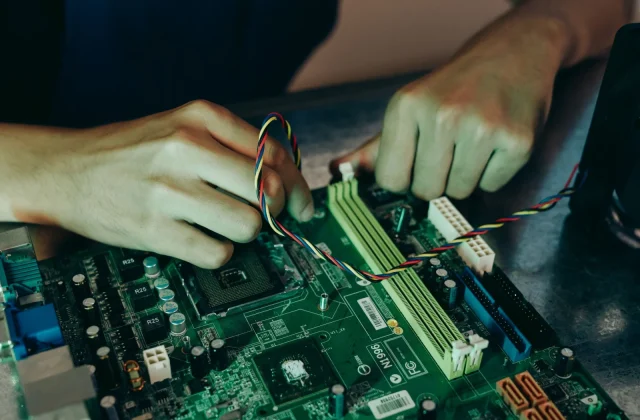
INDUSTRIES WE SERVE
Every industry has its own operating reality, and that is what shapes the work rather than a template. A clinic, a warehouse, a school and a marketplace share very little beyond the need for software people will actually use.
What changes between sectors is the vocabulary, the constraints and the definition of a good outcome. We learn those before we recommend anything, and we build systems that fit how your people already work.
 Startups
A startup needs to learn quickly rather than predict correctly, and the temptation is to build more than the evidence supports. We work from the shortest credible version of the product: the workflow that proves the idea, the parts of the system that would be expensive to change later, and the data you will wish you had captured from day one. Everything is structured so the team can keep shipping after launch, and we say plainly when a simpler tool is the better answer than software.
Explore sector
Startups
A startup needs to learn quickly rather than predict correctly, and the temptation is to build more than the evidence supports. We work from the shortest credible version of the product: the workflow that proves the idea, the parts of the system that would be expensive to change later, and the data you will wish you had captured from day one. Everything is structured so the team can keep shipping after launch, and we say plainly when a simpler tool is the better answer than software.
Explore sector
 Small & Medium Business
In a growing small business the constraint is rarely technology, it is that key work still depends on one person and a set of spreadsheets that only they understand. We look at where hours disappear each week, connect the systems that hold the pieces apart, and give the team something that can be picked up by whoever is on duty. Documentation and handover matter as much as the build, because the real risk is knowledge sitting in one inbox.
Explore sector
Small & Medium Business
In a growing small business the constraint is rarely technology, it is that key work still depends on one person and a set of spreadsheets that only they understand. We look at where hours disappear each week, connect the systems that hold the pieces apart, and give the team something that can be picked up by whoever is on duty. Documentation and handover matter as much as the build, because the real risk is knowledge sitting in one inbox.
Explore sector
 Ecommerce
A store succeeds or fails between the product page and the checkout, and both depend on data being right rather than merely present. We model the catalogue so variants, bundles and supplier feeds stop becoming a source of errors, keep stock owned in one system so the storefront cannot disagree with the warehouse, and build a checkout that is short, mobile-friendly and matched to the payment methods your market actually uses. Order routing and fulfilment are connected before launch, not after the first oversell.
Explore sector
Ecommerce
A store succeeds or fails between the product page and the checkout, and both depend on data being right rather than merely present. We model the catalogue so variants, bundles and supplier feeds stop becoming a source of errors, keep stock owned in one system so the storefront cannot disagree with the warehouse, and build a checkout that is short, mobile-friendly and matched to the payment methods your market actually uses. Order routing and fulfilment are connected before launch, not after the first oversell.
Explore sector
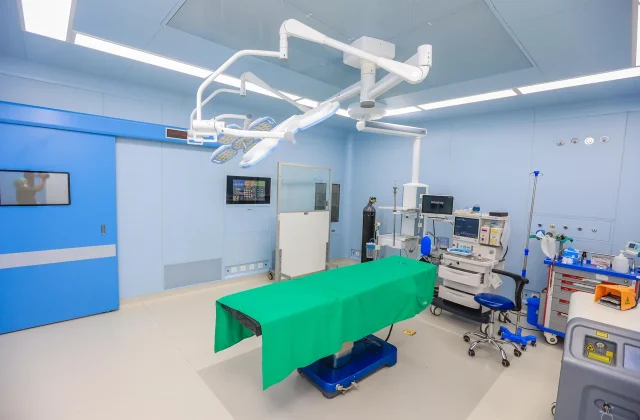 Healthcare
 software has to be useful to a busy professional, careful with patient data, and readable by people who are worried and using a phone. Most of the value is administrative: the booking phone line, the referral letter that gets retyped, the reminder call, the report assembled by hand every Friday. We build that layer, keep access and audit trails in place from the beginning, and leave every clinical judgement with your professionals rather than moving it into software.
Explore sector
Healthcare
Healthcare software has to be useful to a busy professional, careful with patient data, and readable by people who are worried and using a phone. Most of the value is administrative: the booking phone line, the referral letter that gets retyped, the reminder call, the report assembled by hand every Friday. We build that layer, keep access and audit trails in place from the beginning, and leave every clinical judgement with your professionals rather than moving it into software.
Explore sector
 Education
 organisations run on a mix of academic expectation, administrative load and formal accessibility duties, usually with a learning platform that has to keep working. The public website and the learning platform do different jobs and are best kept separate and connected deliberately, so marketing staff can publish without touching course records. We pay particular attention to applications, which are lost at predictable points, and to building to accessibility standards as a starting point rather than a later phase.
Explore sector
Education
Education organisations run on a mix of academic expectation, administrative load and formal accessibility duties, usually with a learning platform that has to keep working. The public website and the learning platform do different jobs and are best kept separate and connected deliberately, so marketing staff can publish without touching course records. We pay particular attention to applications, which are lost at predictable points, and to building to accessibility standards as a starting point rather than a later phase.
Explore sector
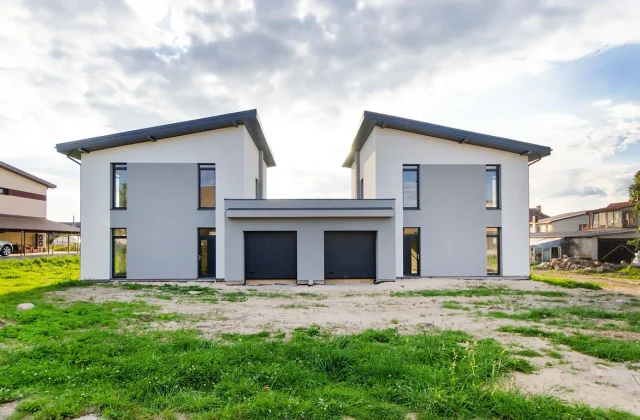 Real Estate
Property businesses lose enquiries in the gap between a website visit, a call and a viewing, so the enquiry path deserves more attention than the home page does. We model the property, agent, office and enquiry data before drawing any screen, because inconsistent addresses and stale status listings are what make search return nothing useful. On top of that we build the search and filtering buyers expect on a phone, connect the portal to the CRM the team already uses, and put viewing booking and follow-up in the same place.
Explore sector
Real Estate
Property businesses lose enquiries in the gap between a website visit, a call and a viewing, so the enquiry path deserves more attention than the home page does. We model the property, agent, office and enquiry data before drawing any screen, because inconsistent addresses and stale status listings are what make search return nothing useful. On top of that we build the search and filtering buyers expect on a phone, connect the portal to the CRM the team already uses, and put viewing booking and follow-up in the same place.
Explore sector
 Manufacturing
Most manufacturers are not short of information; they are short of information in the right place at the moment it is needed. A job sheet is on the shop floor, the schedule is on a whiteboard, quality records sit in a folder, and the monthly report is assembled by hand. We connect those sources so the answers are on a screen, design the interfaces to work with gloves on and a weak signal, and build traceability into the process from goods-in to despatch rather than bolting it on later.
Explore sector
Manufacturing
Most manufacturers are not short of information; they are short of information in the right place at the moment it is needed. A job sheet is on the shop floor, the schedule is on a whiteboard, quality records sit in a folder, and the monthly report is assembled by hand. We connect those sources so the answers are on a screen, design the interfaces to work with gloves on and a weak signal, and build traceability into the process from goods-in to despatch rather than bolting it on later.
Explore sector
 Travel & Hospitality
For a travel business the inventory is the product, and a beautifully presented site is of no use if the availability it shows is wrong. We build the site to read from the system that owns rooms, rates and availability, so a booking is only confirmed once that system accepts it. Alongside that we focus on what the aggregators cannot do: flexible terms, direct upgrades, clearer arrival information and a better answer when something goes wrong at eleven at night, which is what actually shifts someone to book directly.
Explore sector
Travel & Hospitality
For a travel business the inventory is the product, and a beautifully presented site is of no use if the availability it shows is wrong. We build the site to read from the system that owns rooms, rates and availability, so a booking is only confirmed once that system accepts it. Alongside that we focus on what the aggregators cannot do: flexible terms, direct upgrades, clearer arrival information and a better answer when something goes wrong at eleven at night, which is what actually shifts someone to book directly.
Explore sector
 Finance & FinTech
Financial software is judged on whether a person can trust it: a figure that ties back to where it came from, an explanation available without a phone call, and an audit trail that shows who did what and when. We build the customer-facing journeys, internal case tools and integrations around core banking and payment systems that stay where they are, with reconciliation, exception handling and role-based access designed in from the start rather than reviewed after launch.
Explore sector
Finance & FinTech
Financial software is judged on whether a person can trust it: a figure that ties back to where it came from, an explanation available without a phone call, and an audit trail that shows who did what and when. We build the customer-facing journeys, internal case tools and integrations around core banking and payment systems that stay where they are, with reconciliation, exception handling and role-based access designed in from the start rather than reviewed after launch.
Explore sector
WHY SMARTEDGE
Most software projects do not fail because the technology was wrong. They fail because nobody agreed what the system had to do, or because the person who inherited it could not change it safely. That is why we start with the business process rather than the platform, and why we treat handover documentation as part of the build rather than an extra. The result is technology your organisation can actually run, and a team that can keep running it after we step back.

OUR DEVELOPMENT PROCESS
We follow a clear and proven process to turn your ideas into high-quality digital solutions. You stay involved at every step with complete visibility.
FEATURED WORK
We build high-quality websites, web applications, mobile apps and custom software that help businesses deliver better experiences, improve efficiency and grow.
Project case studies are published here as they are completed and verified.
 What Makes a Software Project Fail in the First Year
Most systems do not fail in the first month, they fail in month eight, and the causes are boring and
Read More
What Makes a Software Project Fail in the First Year
Most systems do not fail in the first month, they fail in month eight, and the causes are boring and
Read More
 The Difference Between a Website Owner and a Website Maintainer
Ownership and maintenance are two different jobs that often get one job title, and the queue always wins because it
Read More
The Difference Between a Website Owner and a Website Maintainer
Ownership and maintenance are two different jobs that often get one job title, and the queue always wins because it
Read More
 How to Read a Development Proposal
A proposal is a comprehension test, a plan, and a contract stacked together, and clients read it in the wrong
Read More
How to Read a Development Proposal
A proposal is a comprehension test, a plan, and a contract stacked together, and clients read it in the wrong
Read More
INSIGHTS & RESOURCES
Practical articles on web development, AI, digital marketing, ecommerce, CRM, ERP and more.
It starts with a conversation rather than a form. You describe what is not working, what you are trying to reach, and whether anything already exists that has to keep working. From that we tell you which parts genuinely need building, which can be configured, and which are better left alone for now. If it suits, send us what you have and we will come back with a written summary rather than a sales call.
Both, and the shape of the work is different rather than the quality. A single landing page, a small storefront and a multi region web application are all ordinary engagements here. What we ask for in return is the same either way: someone who can decide, and an honest answer about what the budget covers. Small projects are described on the web development page.
The shortlist is published rather than described in the abstract: WordPress, Shopify, Magento, Laravel, PHP, React and Node on the build side, with AWS, Azure and Google Cloud for hosting. The technology and innovation page explains why each one is here and what it is used for. Where a job does not need a framework, we say so instead of reaching for one.
It depends on what is being built and we will not quote a figure that means nothing. A brochure site, a transactional storefront and a custom business application differ by an order of magnitude. What we do is give you a fixed price for a defined scope, and tell you which parts of your requirement are inside it and which are not, before anybody signs. Our approach to estimating sets out how that number is reached.
Yes, and a good part of the work we do is looking after things other people built. Hosting, monitoring, backups, security patching and small changes are covered by cloud and server management and by the maintenance side of web development. The point of a handover is that the system keeps running without us, which is discussed in the handover article.
We build for both iOS and Android, and we will tell you honestly whether a native app is the right answer or whether a responsive website would do the job at a fraction of the cost. Where an app is justified, the approach and the trade offs are set out on the mobile app development page.
Yes. Clients are spread across the United States, the United Kingdom, Australia, Germany and India, and we work in the client's time zone rather than expecting them to work in ours. Everything is written down, every call is summarised afterwards, and nothing depends on being in the same room.
Use the contact form and describe the situation rather than the solution. If you already have a proposal from someone else, ask us to read it. We will tell you what we would do differently and why, whether or not that helps us win the work.
STARTING A PROJECT
A website that has stopped converting, a process that has outgrown the people doing it by hand, a system nobody wants to open: these are the enquiries we get most often, and they are all reasonable places to start. You describe the problem, we ask the questions that shape a realistic answer, and you get a written proposal with scope, stages and a fixed price before anything is committed. That first conversation costs nothing and is usually the most useful hour in the project.